Why Valorant Phoenix remains the best duelist pick for aggressive ranked climbing
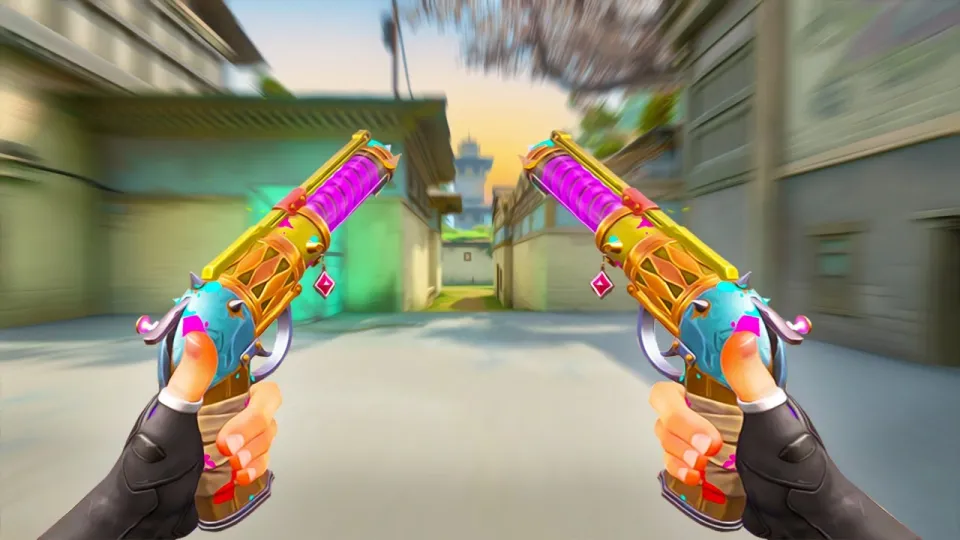
Video: 20 Minutes of Satisfying Valorant Clips
You can order the same kind of articles for your own video to boost it on YouTube and Google. Just message the Telegram bot @sat_sit_bot. The bot writes and publishes the articles itself (with your YouTube video embedded) on popular topical websites (no ads). Free trial — 50 articles.
· based on the channel Rawzu
Key takeaways
- Phoenix is an offensive Valorant duelist built around hunting enemies while blocking their ability to fire back.
- Blaze creates a wall that blocks vision and deals damage, letting Phoenix cross open areas safely.
- Curveball blinds enemies even when they are hiding behind corners.
- Hot Hands plus the Run it Back ultimate make Phoenix one of the most durable duelists in the game.
- Rawzu plays Phoenix at 400 DPI and 0.625 sensitivity on a 1440x1080 stretched resolution with crosshair 1-6-2-2.
Valorant players looking for the best aggressive duelist to climb ranked should pick Phoenix, because his kit combines self-healing, a wall that blocks vision, a corner-proof blind and an ultimate that literally gives him a second life. No other duelist in Valorant offers that much self-sufficiency inside a single kit, which is why Phoenix rewards players who take fights first and refuse to wait for a team setup. If you want to see the ceiling of that playstyle in motion, watch Rawzu live on Kick during his daily streams, where the Phoenix gameplay is pushed to its fastest.
Why Phoenix is the best duelist for aggressive Valorant players
Phoenix is an offensive Valorant agent who specializes in hunting down enemies while crippling their ability to fire back. That single design sentence explains why he feels so different from other duelists: instead of relying on a teammate to trade him, Phoenix brings his own entry tools, his own sustain and his own escape from death. A Jett needs a smoke for her dash line, a Raze needs a drone or a teammate to clear angles, but Phoenix can start the round alone and still have answers when the fight goes wrong. For solo-queue Valorant, that independence is worth more than any flashy movement tech.
The trade-off is range. Phoenix has no long-range utility, no recon and no vertical mobility, so he thrives in close and mid-range fights on maps where chokepoints are tight. That is exactly why his pick rate spikes on Lotus and Icebox, two maps where site entries happen through narrow corridors and where a well-placed wall can split a defensive setup in half.
How the Phoenix abilities work in Valorant
Phoenix's kit is built around four tools, and each one solves a specific problem during a round.
- Blaze — a wall of fire that blocks vision and deals damage to anyone standing in it. Use it to cut off an operator angle, to cross an open lane, or to split a site so defenders cannot see both halves at once.
- Curveball — a flash that curves around geometry and blinds enemies even when they are hiding behind corners. It is the most forgiving blind in Valorant for players who cannot line up a perfect pop flash.
- Hot Hands — a fireball that damages and heals Phoenix when he stands in the flames. It doubles as post-plant pressure and as a way to top up health before a retake.
- Run it Back — the ultimate that marks Phoenix's position, and if he dies during it he respawns at the mark with full health. It is a free entry, a free info-gathering tool and a free trade all in one.
Read together, the kit is a loop: blind with Curveball, wall off the angle with Blaze, take the duel, heal with Hot Hands, and if it all collapses, press Run it Back and do it again.
Phoenix settings and crosshair used by Rawzu
The Valorant settings behind high-level Phoenix gameplay matter because the agent is played at close range, where flick speed and clean crosshair placement decide duels. Rawzu runs 400 DPI with 0.625 in-game sensitivity, a 1440x1080 stretched resolution, and the crosshair code 1-6-2-2. The hardware list is a Lamzu Maya X mouse, a Zowie H-SR-SE 2 Blue mousepad and a Zowie XL2566K 360Hz monitor.
The stretched resolution is the interesting part. Running 1440x1080 instead of native 1920x1080 widens enemy models on screen, which makes close-range Phoenix duels easier to track and makes the Curveball blind follow-up more consistent. The low effective sensitivity keeps the crosshair steady during the Blaze entry, while the 360Hz panel reduces the input delay when Phoenix flashes and swings in the same motion. None of it replaces game sense, but for an agent who fights at knife range, the setup compounds every small advantage.
Common questions from Phoenix players in Valorant
Players watching satisfying Phoenix clips often ask the same three things, and the answers are less mysterious than they look.
- "Why do enemies never shoot back in these clips?" They do, but the clips are the moments where Phoenix won the duel first. The blind lands before the swing, the wall blocks the second angle, and the fight is over before the trade arrives. Replicating that means flashing before you peek, not after.
- "Why does the Vandal look so strong here?" The Vandal one-taps through walls of pressure when the crosshair sits at head level. Phoenix players get more head-level duels than most because Curveball forces enemies to turn away, giving a free moment to line up the shot.
- "How do you get an ace without losing health?" Hot Hands heals Phoenix while he holds a post-plant angle, and Run it Back removes the risk of the first aggressive peek. Sustain plus a second life is the whole reason the ace happens.
What satisfying Valorant clips actually teach
Satisfying Valorant clip compilations are entertainment first, but they are also a compressed library of decision-making. A 20-minute Phoenix montage shows the same patterns repeating: blind, wall, swing, heal, ultimate, repeat. Watching how a player chains those four abilities under pressure teaches timing faster than any written guide, because you see the moment the wall goes down relative to the peek, and the moment the ultimate is pressed relative to the man advantage.
The commentary matters too. Teammates reacting in real time show how much space a confident Phoenix creates for the rest of the team, and how quickly a round flips when the entry duelist wins the first fight. That is the practical takeaway: Phoenix is not just a fragging agent, he is a tempo agent, and tempo is what wins ranked games in Valorant.
Useful links
- Daily Phoenix streams: https://kick.com/rawzu
- Original music: https://open.spotify.com/artist/6DbATPR1PTNMx7U918bg1Q
- Community Discord: https://discord.gg/axnFwyvxp3
Final verdict on picking Phoenix in Valorant
Phoenix is the best duelist for aggressive Valorant players because his kit removes the two biggest risks of entry fragging: dying without value and losing health before the next fight. Blaze, Curveball, Hot Hands and Run it Back cover vision denial, blinding, sustain and a second life, all without a single teammate's help. Players who like to take the first duel every round will get more out of Phoenix than out of any other duelist in the game. For a live look at how far that playstyle can be pushed, watch Rawzu on Kick and study the entry timing round after round. The channel Rawzu is the source of this breakdown, and its Phoenix gameplay remains one of the clearest illustrations of the agent played at full aggression.
Questions & answers
Is Phoenix a good duelist in Valorant for solo queue?
Yes. Phoenix is one of the most self-sufficient duelists in Valorant because he brings his own blind, his own wall, self-healing and an ultimate that gives him a second life. That means he can start fights without waiting for teammates, which is exactly what solo queue demands. The only real limitation is range, so he performs best on close-quarter maps like Lotus and Icebox.
How do you use Phoenix's Run it Back ultimate properly?
Run it Back should be used to take a fight you would otherwise avoid, not to save yourself after a mistake. Push an angle, gather information, force a rotation or bait out utility, and if you die you respawn at the marked spot with full health. Because the ultimate refunds the risk, aggressive players should treat it as a free entry tool every time it is available.
Why does Phoenix's Curveball blind work better than other Valorant flashes?
Curveball curves around geometry, so it blinds enemies even when they are holding from behind a corner or a box. That makes it far more forgiving than a traditional pop flash that requires precise lineups and timing. Combined with Blaze blocking vision, Phoenix can create a blind window that no other duelist matches at close range.
What Valorant settings and crosshair does a high-level Phoenix main use?
Rawzu plays Phoenix at 400 DPI with 0.625 sensitivity, a 1440x1080 stretched resolution and the crosshair code 1-6-2-2. The hardware is a Lamzu Maya X mouse, a Zowie H-SR-SE 2 Blue mousepad and a Zowie XL2566K 360Hz monitor. The stretched resolution widens enemy models, which helps in the close-range duels Phoenix takes every round.
Source: 20 Minutes of Satisfying Valorant Clips · Markdown version